
Code and symbology
EAN/UPC, Code 128, GS1-128, ITF-14, QR, Data Matrix, GS1 DataMatrix or another agreed type.
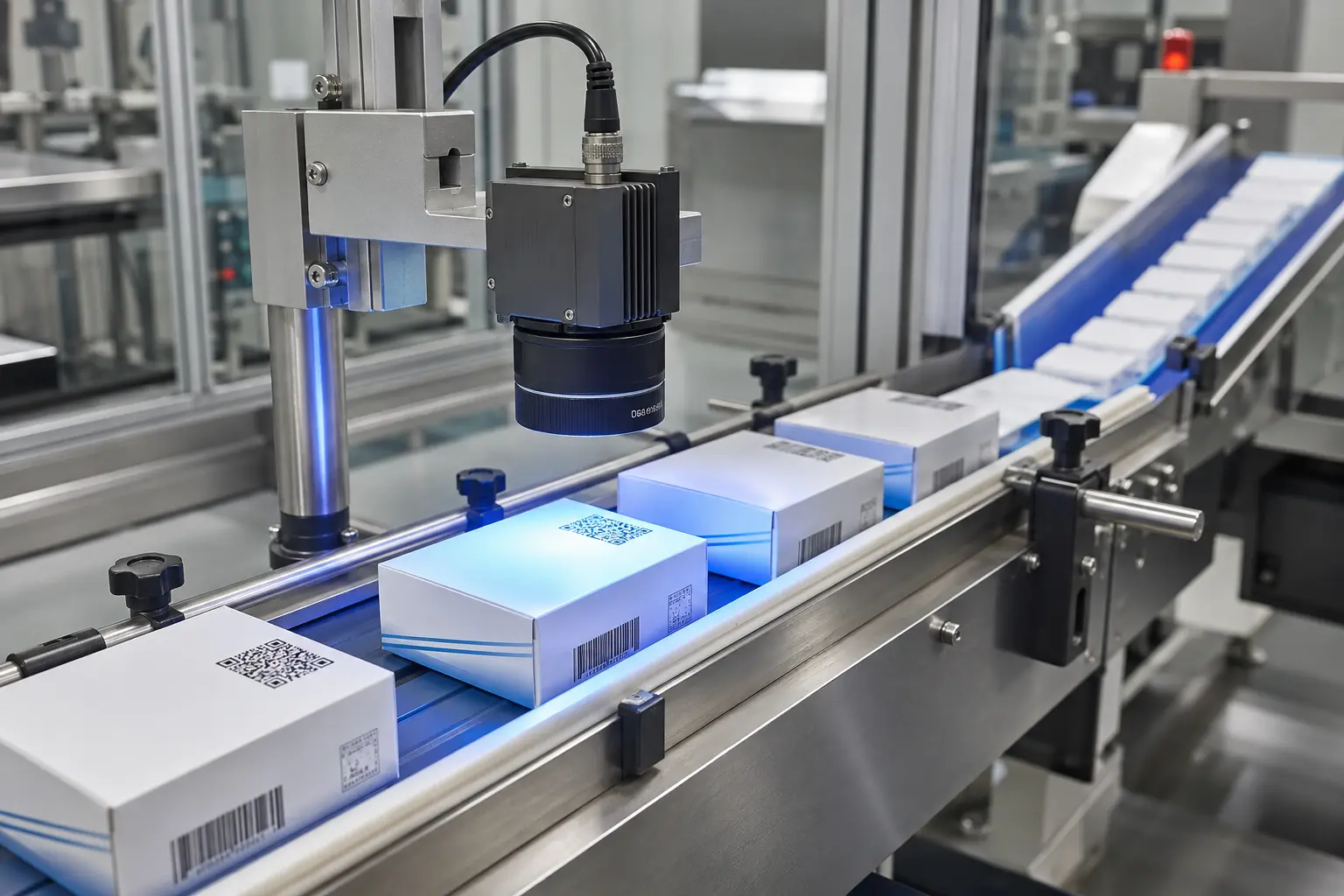
A useful quotation depends on more than code type and line speed. This checklist captures the imaging, data and handling information needed to engineer a dependable system.
Define what must be checked, the smallest physical code, the full product and speed range, the source of the expected data, and exactly what the line must do after a failure. Real samples should then prove the proposed imaging window.
EAN/UPC, Code 128, GS1-128, ITF-14, QR, Data Matrix, GS1 DataMatrix or another agreed type.
Code width, height, module or X dimension, quiet zone and expected position tolerance.
Inkjet, thermal transfer, laser, label or direct marking on matt, glossy, curved or flexible material.
Maximum products per minute, conveyor speed, pitch, stop-start behaviour and product gaps.
Representative products let us prove lighting, resolution, reading margin and practical tolerances.
Technical content reviewed by the Oxford Vision Systems engineering team. Updated 26 August 2026.
Concise answers to the questions manufacturers ask when defining a barcode inspection application.
Ask an engineerProvide representative good products, known failures, the smallest and largest packs, challenging print or substrate variants and any available customer code specification.
They determine the image resolution needed. A wide field of view may not resolve a very small module unless the camera, lens and position are selected accordingly.
Yes. Define product tracking, reject mechanism, confirmation, bin capacity, full-bin sensing, line-stop conditions and the required recovery sequence.