
Prove the image
Trial representative good, marginal and failed samples under suitable lighting.
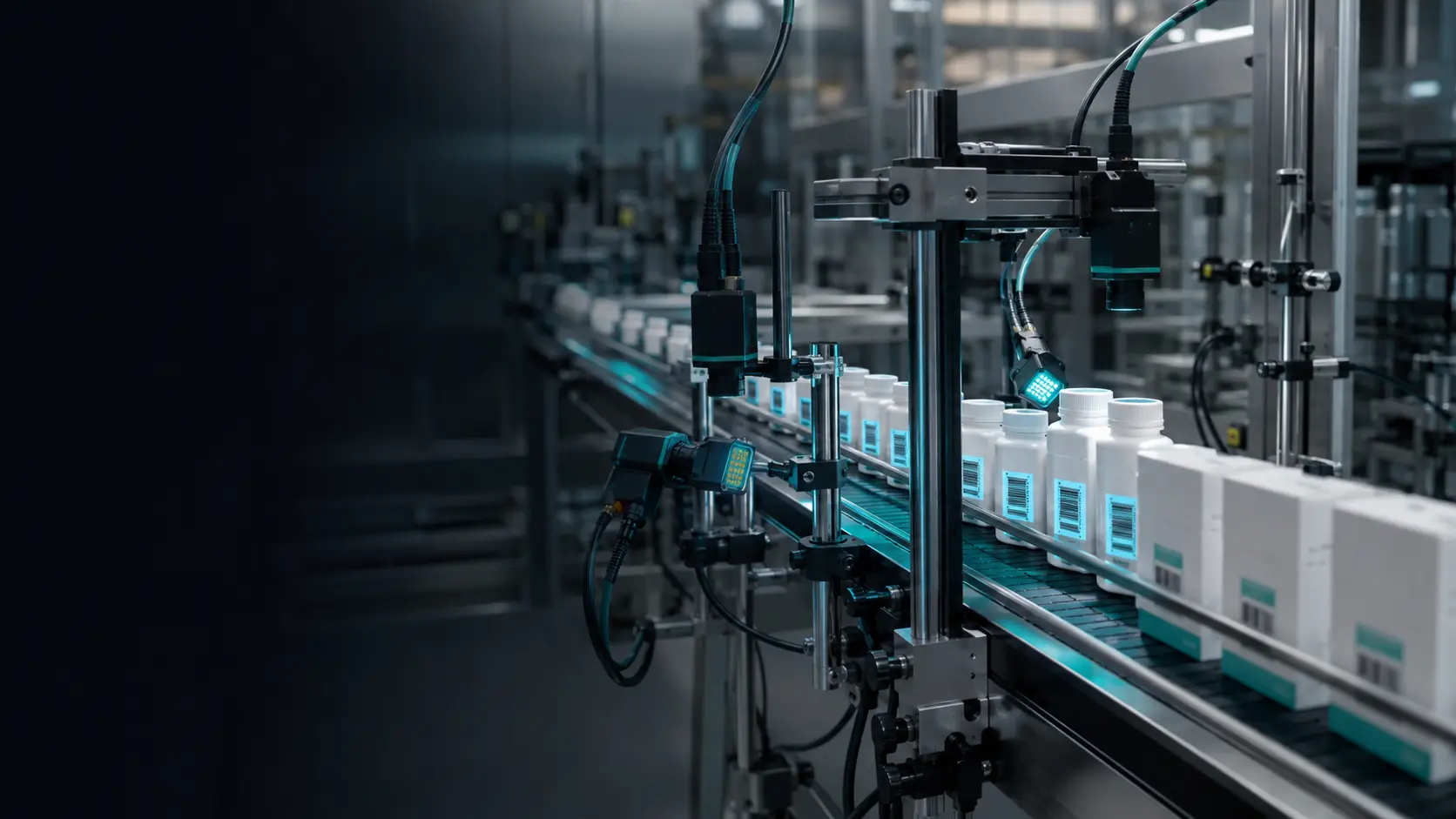
Move from occasional offline samples to automatic code inspection on every presented product, with immediate pass, fail, reject and production evidence.
An inline barcode verifier is installed on the production line to inspect each presented code automatically. It can distinguish no-code, no-read, wrong-code and quality failures, then signal the PLC, reject the affected item and retain the result.
“Barcode verification” is used broadly in industry. Some projects need a dependable decode and expected-data match; others need calibrated print-quality grading against a defined ISO method. Oxford Vision Systems establishes the acceptance rule first, then engineers the imaging, controls and handling around the real application.
For high-throughput lines, the complete system also needs reliable triggering, product tracking and proof that a failed item reached the reject point. Counts, images, decoded strings and grade data can be stored according to the agreed reporting requirement.
The smallest module, total field of view, motion, reflections, print process, product spacing and available reject distance all influence the design. Database response time and fail-safe behaviour matter when the expected value comes from another system.
Trial representative good, marginal and failed samples under suitable lighting.
Separate missing, unreadable, incorrect, duplicate and low-quality outcomes.
Maintain identity from camera trigger to confirmed reject or accepted transfer.
Agree counts, images, data, user events, retention period and export route.
Prepare the code, speed, data and reject information needed for a useful engineering review.
Concise answers to the questions manufacturers ask when defining a barcode inspection application.
Ask an engineerIt is a fixed inspection station that captures codes automatically as products move through production. Depending on the specification, it can confirm presence, decode data, validate the expected value, monitor print quality and trigger a reject or line stop.
Yes, when the line layout, product pitch, code position, camera resolution and processing time support one inspection result for every presented item. A sample trial should prove the operating window before final specification.
The main cost drivers are code size, field of view, line speed, product presentation, number of cameras, formal grading requirements, database integration, guarding, reject hardware and validation or reporting needs.
Not automatically. A reader confirms decoding; a production vision system can add data and reject logic; formal symbol grading requires the specified measurement method, calibration and reporting. The project should state exactly which result is required.